openpack, a German start-up digitalising the packaging industry through machine networking, standardised data, and optimised processes (Industry 4.0 / IIoT).
Across openpack's clients, shift handover was rudimentary, slow, and paper-based, causing long transitions, lost information, and reduced efficiency.
Develop a robust and intuitive interface for the shift handover process that integrates with the existing openpack platform, works across different client environments, and can scale.
In the packaging industry, shift handovers are a daily bottleneck.
Workers pass critical information between teams (machine states, incidents, special orders). Often this happens through handwritten notes or verbal briefings with no standardised process. Information gets lost. Transitions take longer than they should.
Shift managers were spending 20 to 25 minutes on handovers. The target is 10 to 15. Information was passed verbally or written in logbooks. Night shifts missed updates from departments like Production Planning that only operate during the day. Serious incidents had no standardised reporting process. The result: lost time, lost information, and unnecessary risk on the factory floor.
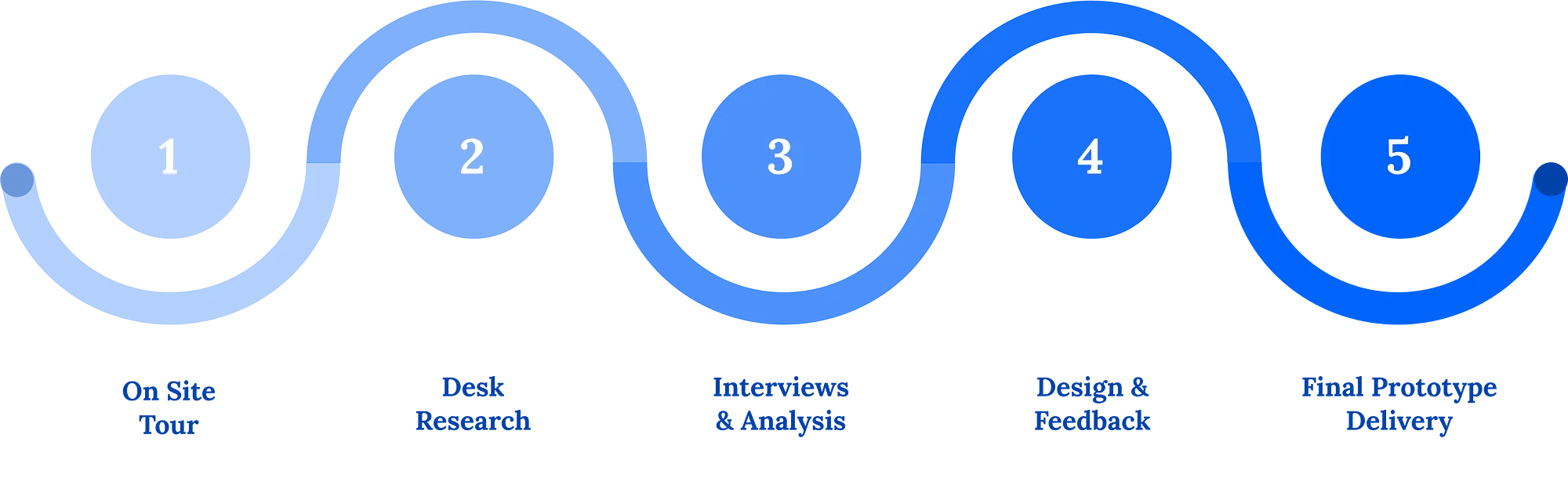
The project went through five phases
We started on the factory floor.
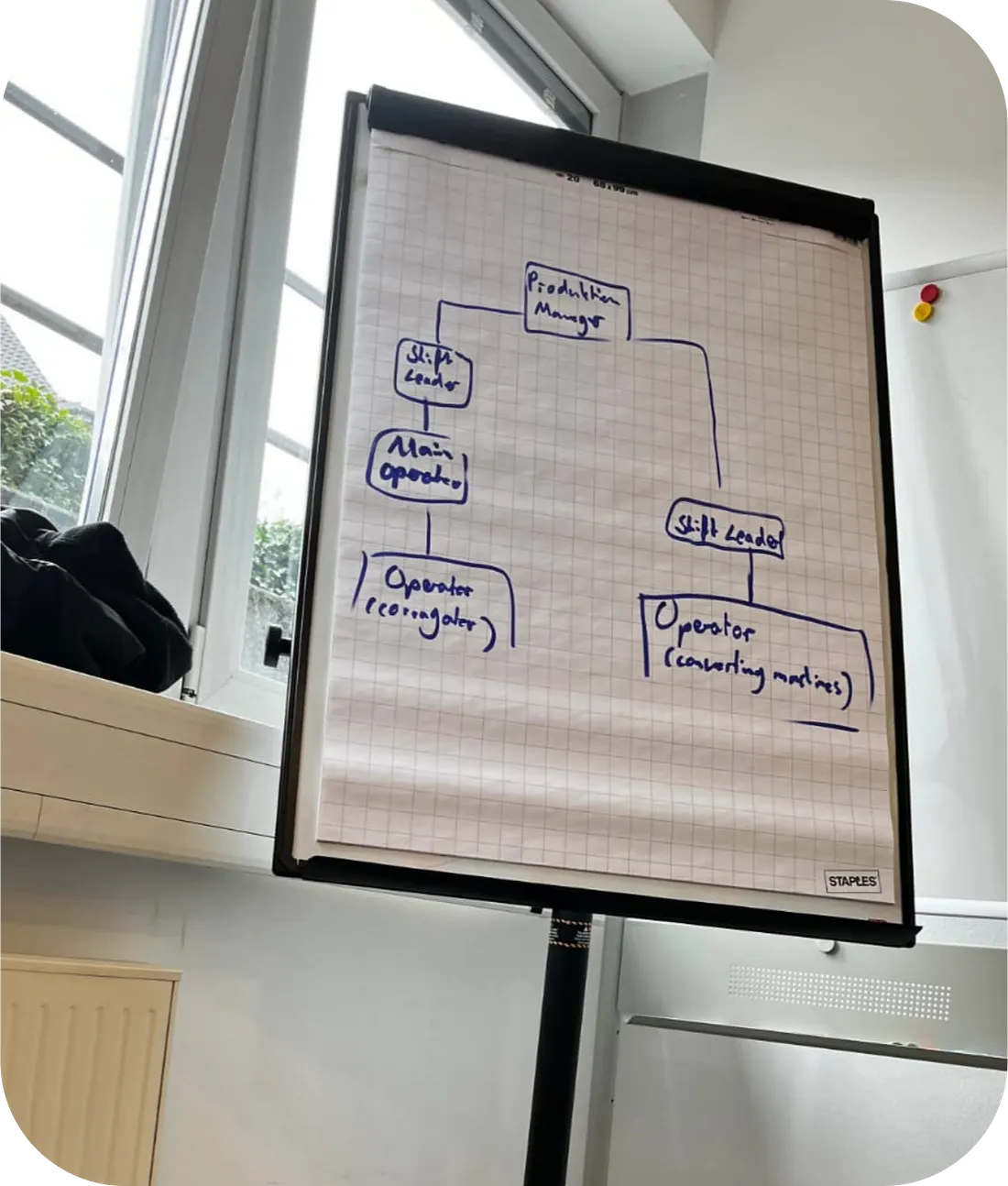
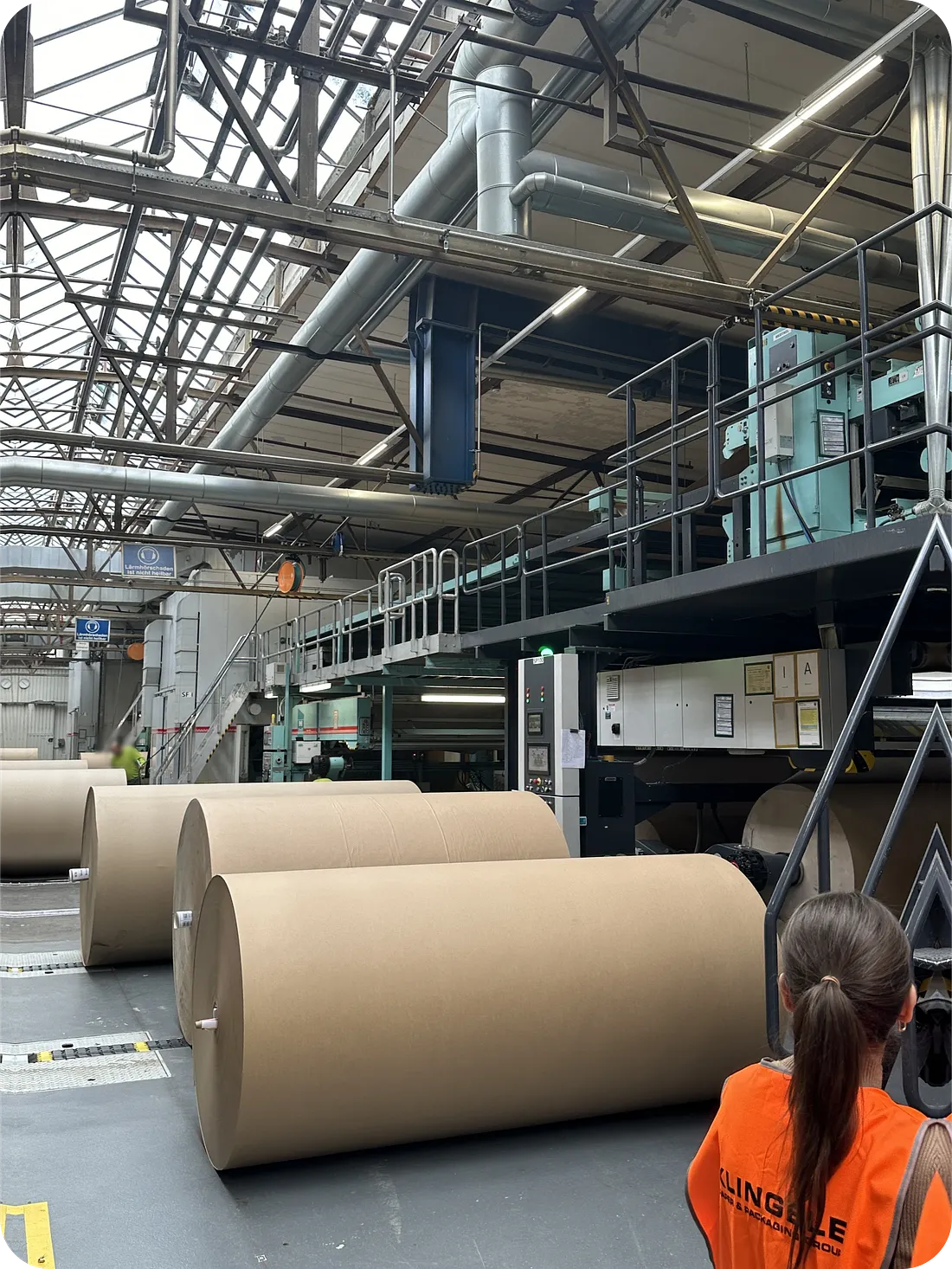
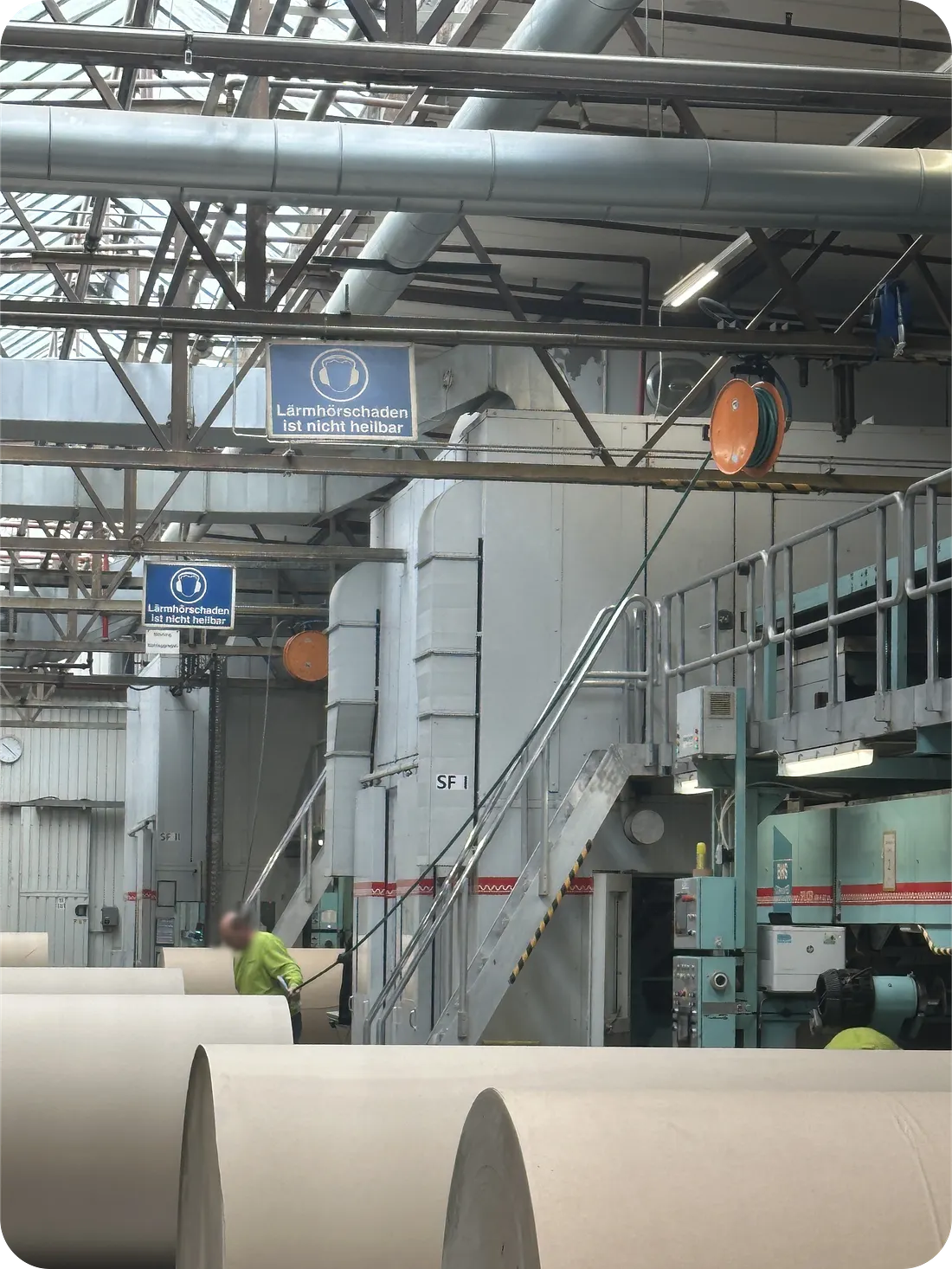
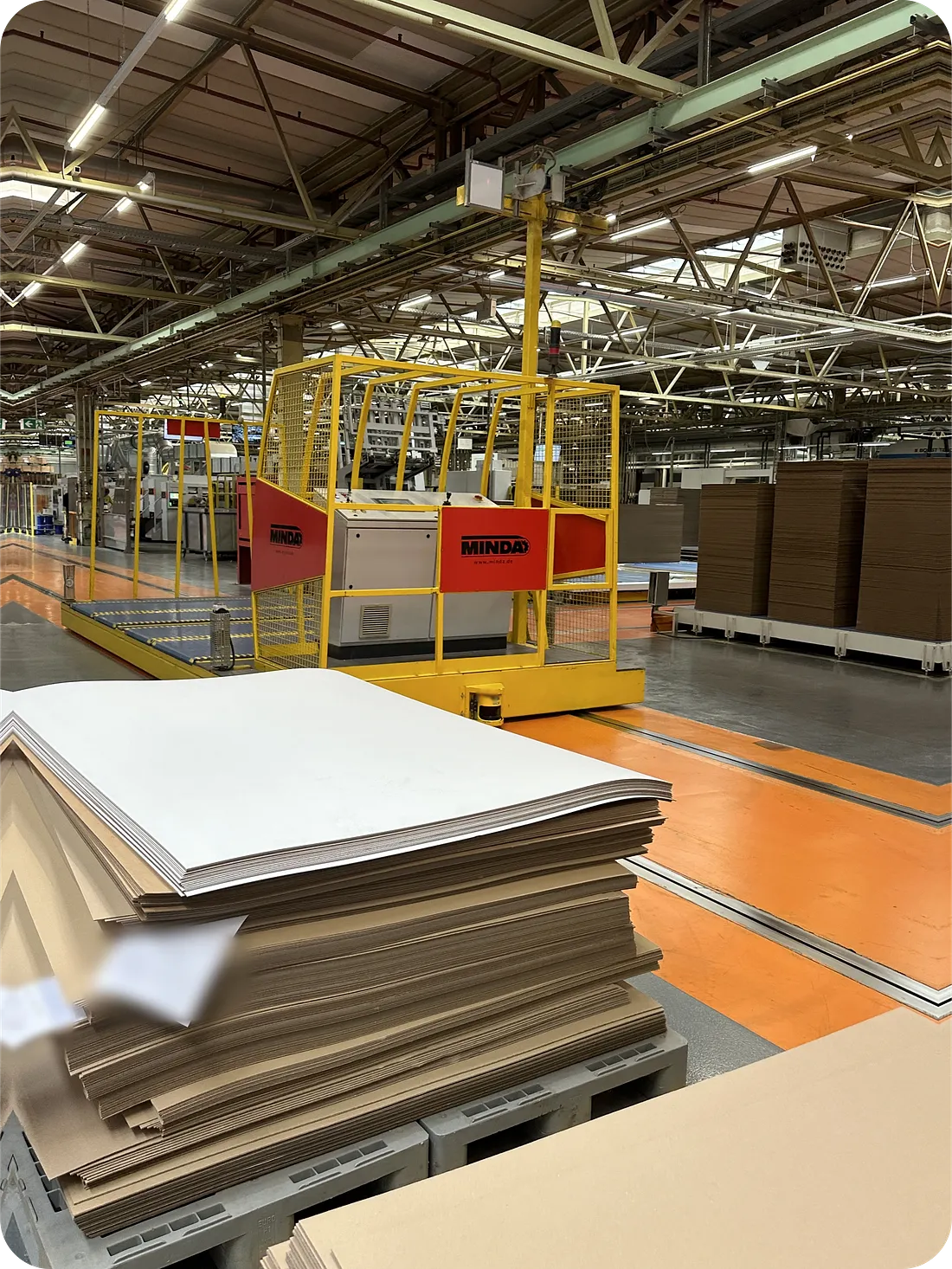
To understand the challenges properly, we visited the factory floor. We spoke directly with workers and observed the manufacturing process as it happened. Taking part in the daily operations ourselves gave us a first-hand picture of the workflow and where the existing process breaks down.
This gave us direct insight into:
- •Floor environment
- •Methods of working
- •Hierarchy, roles and information flow
- •Communication practices
- •Documentation methods
- •Production pipeline and process
It helped us identify where a digital solution could actually improve things. It also built trust with the people we would later be designing for, which mattered more than we expected.
Looking outward.
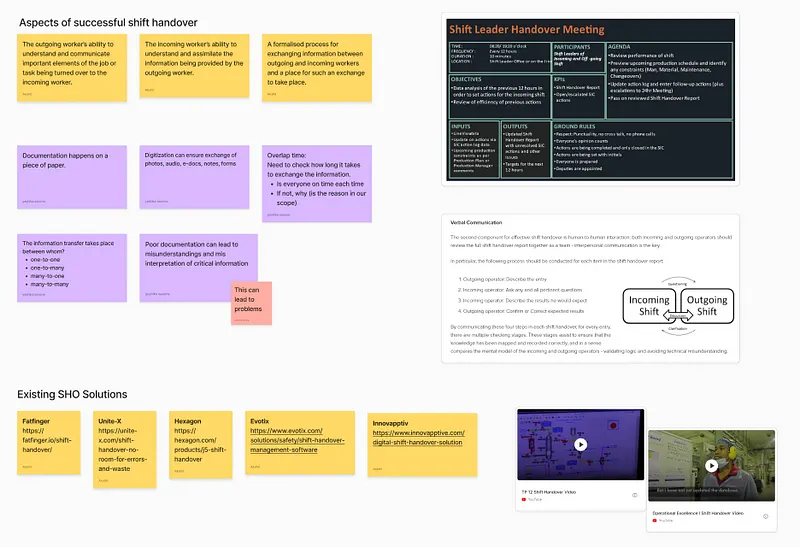
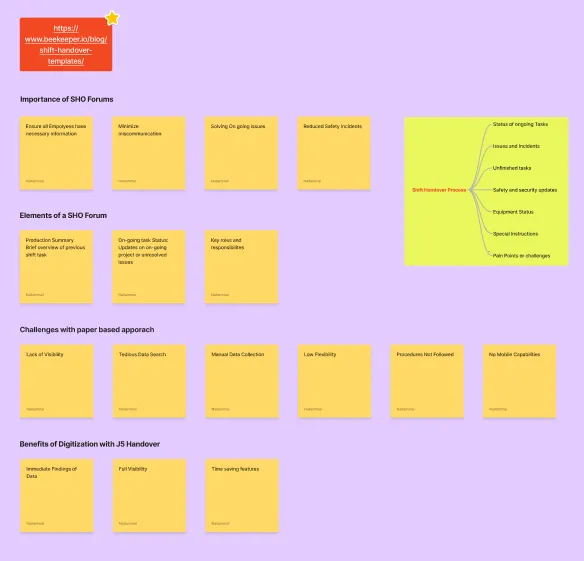
With a clear picture of the operational side, we looked into how shift handovers are handled in other industries. We went through academic papers, industry reports, and existing digital solutions to see how other sectors deal with similar problems.
- •Industry standards for shift handover
- •Best practices from other sectors
- •Existing digital handover solutions
- •Academic papers & industry reports
This gave us a baseline of established practices and surfaced features that worked elsewhere and could be adapted for the packaging context.
Interviewing people who run the handover.
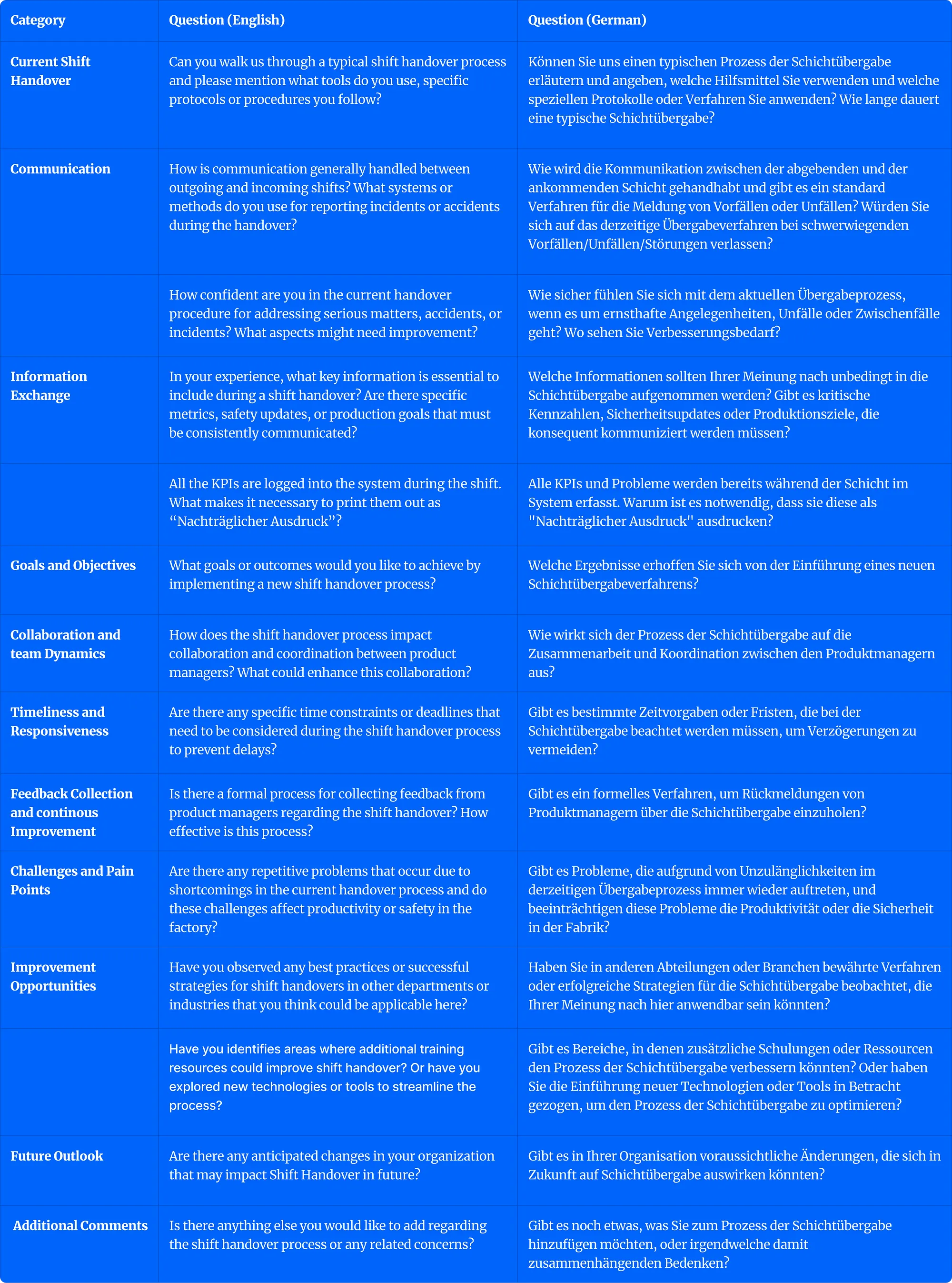
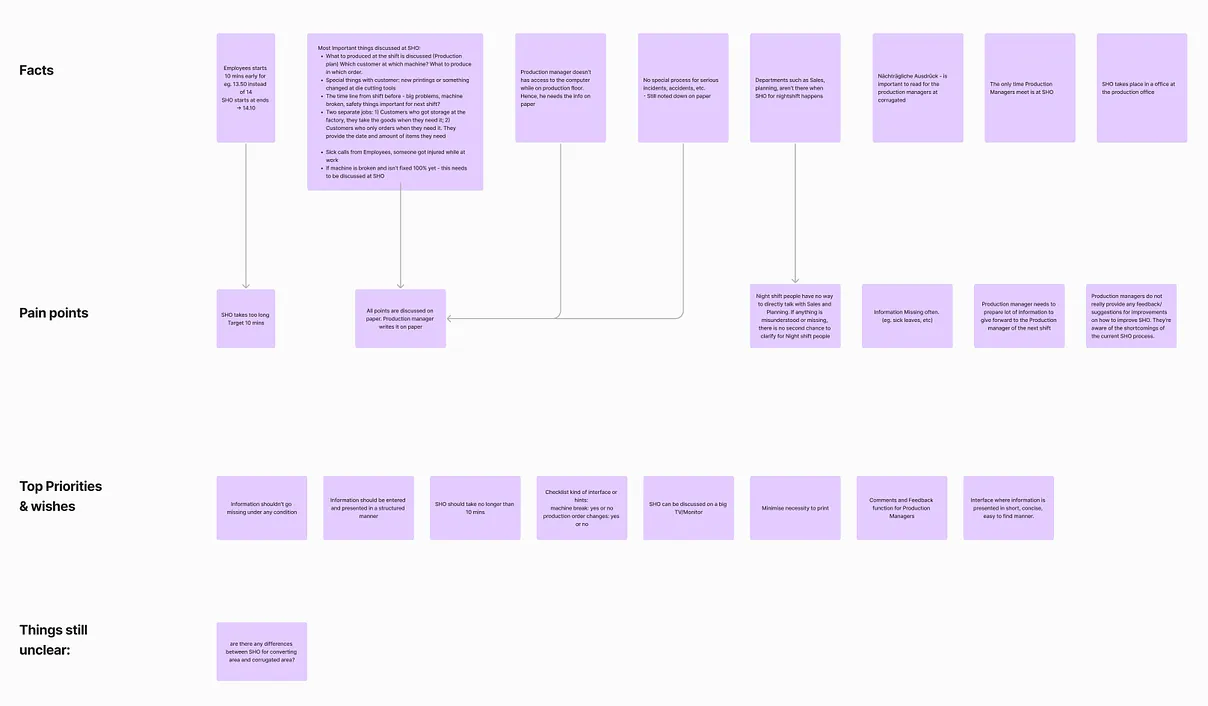
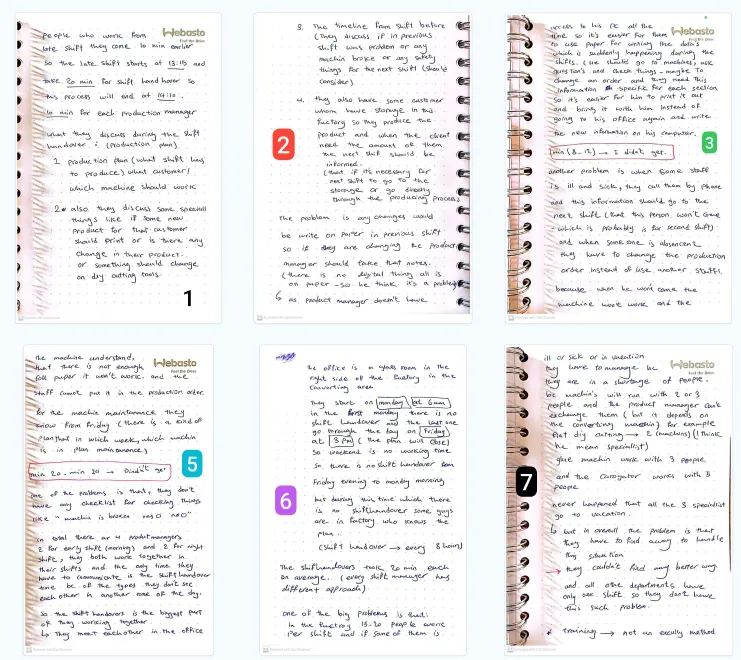
After the factory visit and desk research, we conducted semi-structured interviews with shift handover managers at packaging plants. Interviews were held in English or German, depending on what the participant preferred. We also collected pain points and wishes from the participants, then analysed the notes and transcripts to identify concrete areas for improvement.
Designing the Solution.
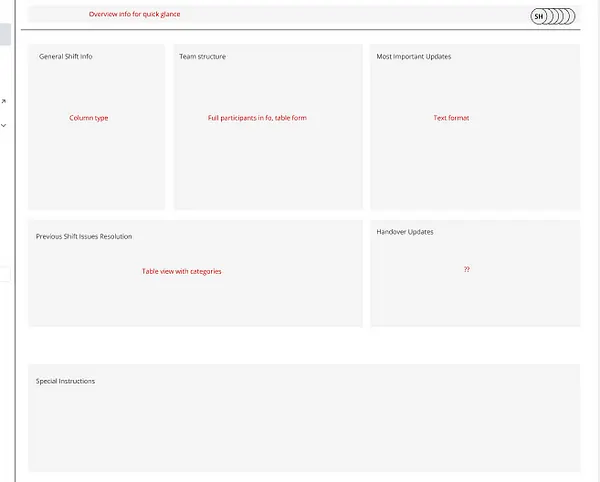
Research in hand, we moved from sketches to a tested, high-fidelity flow, letting user feedback at each step decide what stayed and what changed.
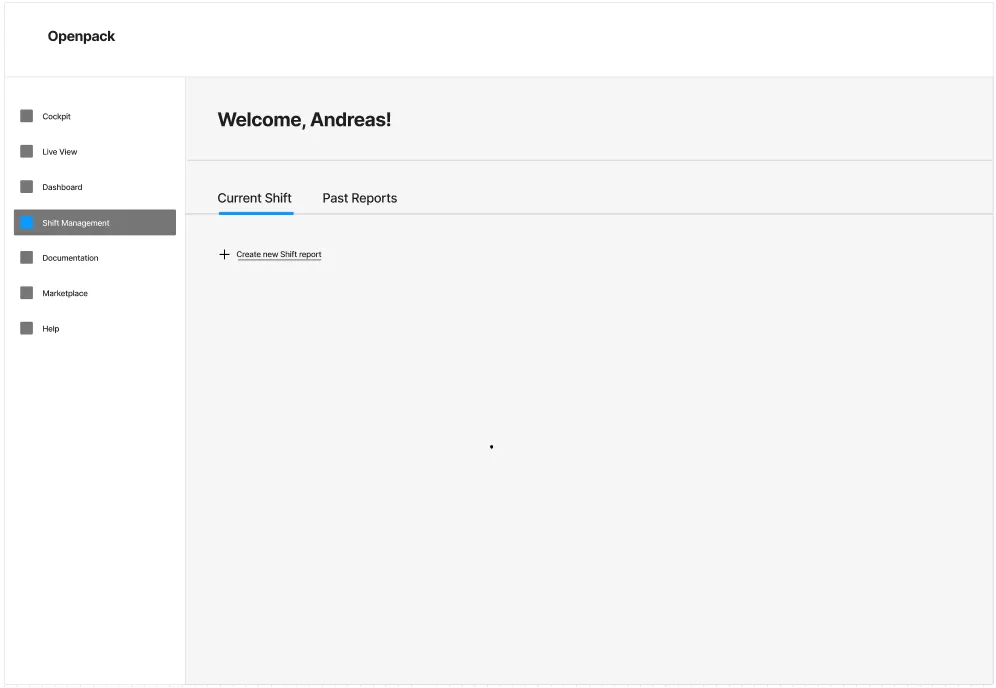
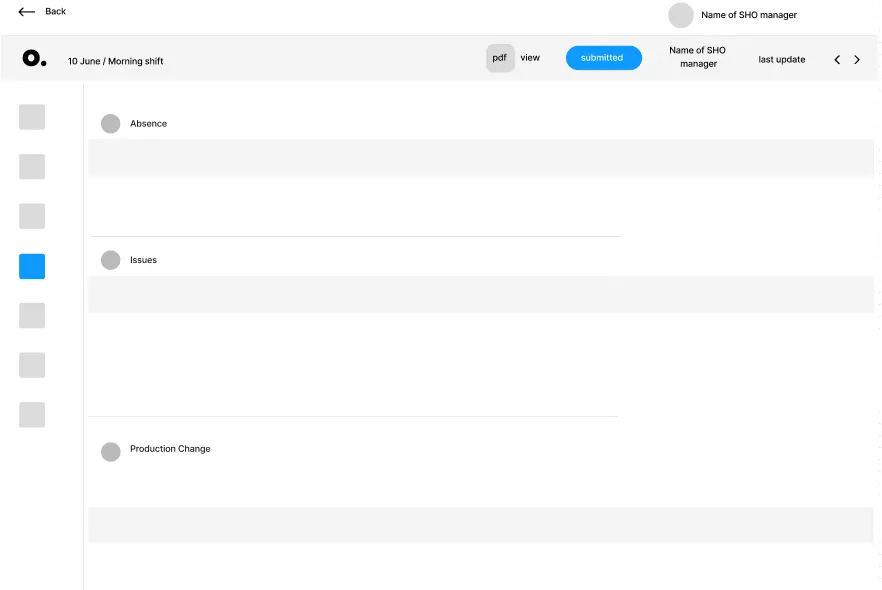
We built a low-fidelity click prototype and tested it with the shift managers from our research. Their feedback changed the design in two places in particular: the incident reporting flow and the handover checklist. Both went through two rounds of revision based on their input. With those adjustments made, we moved on to the high-fidelity prototype.
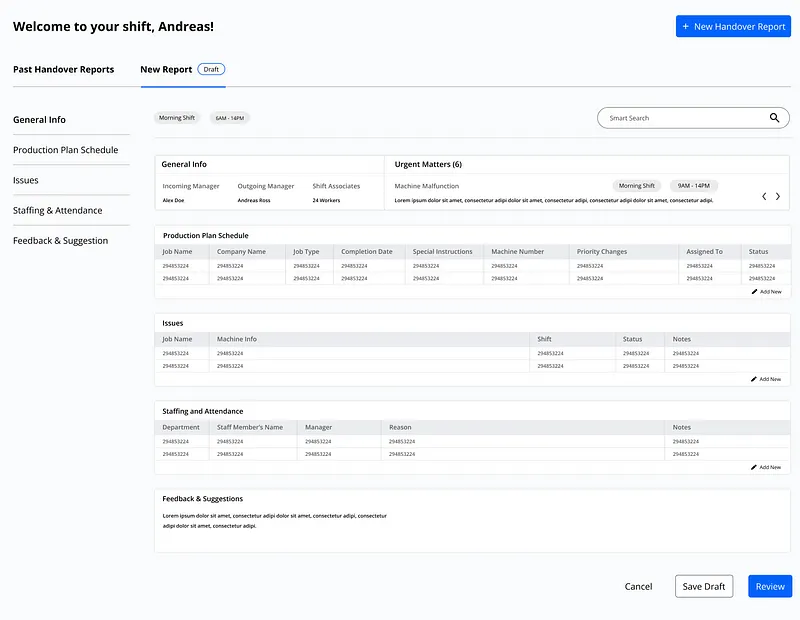
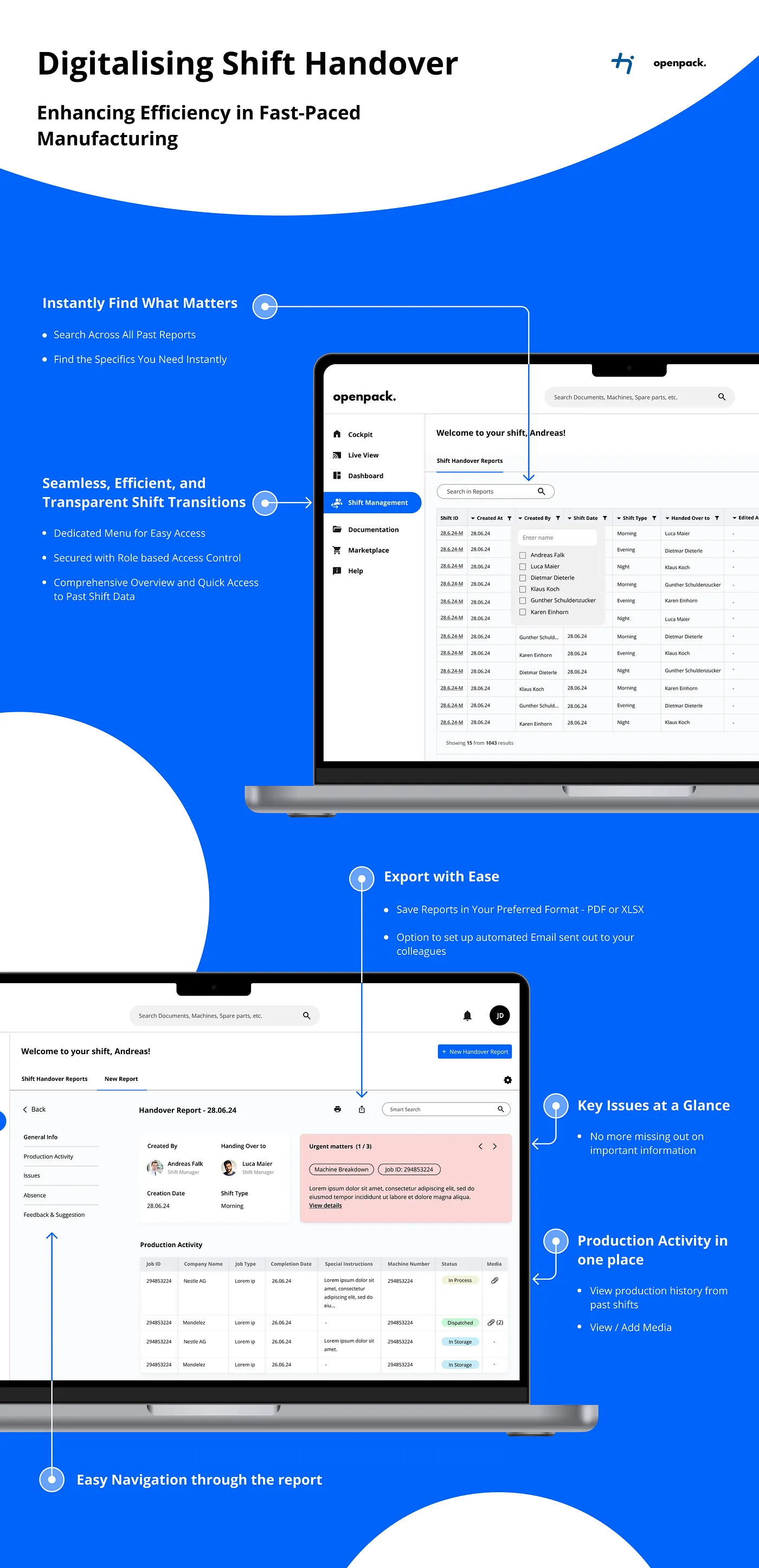
A handover the floor could actually use.
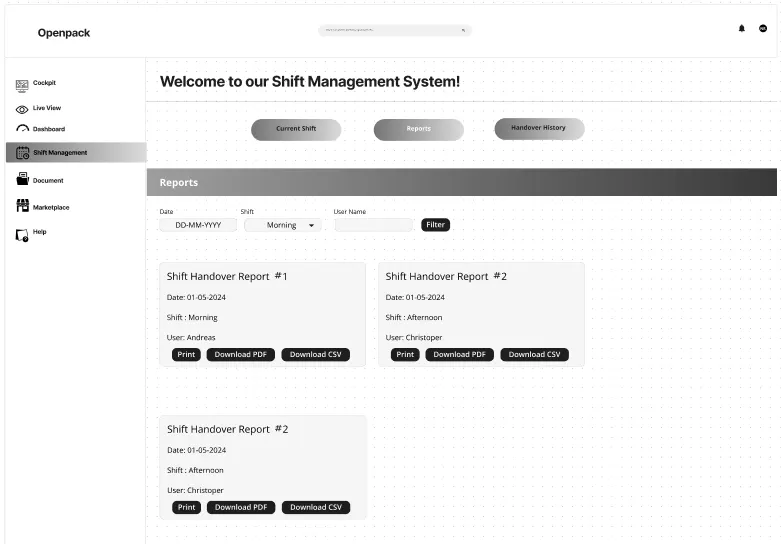
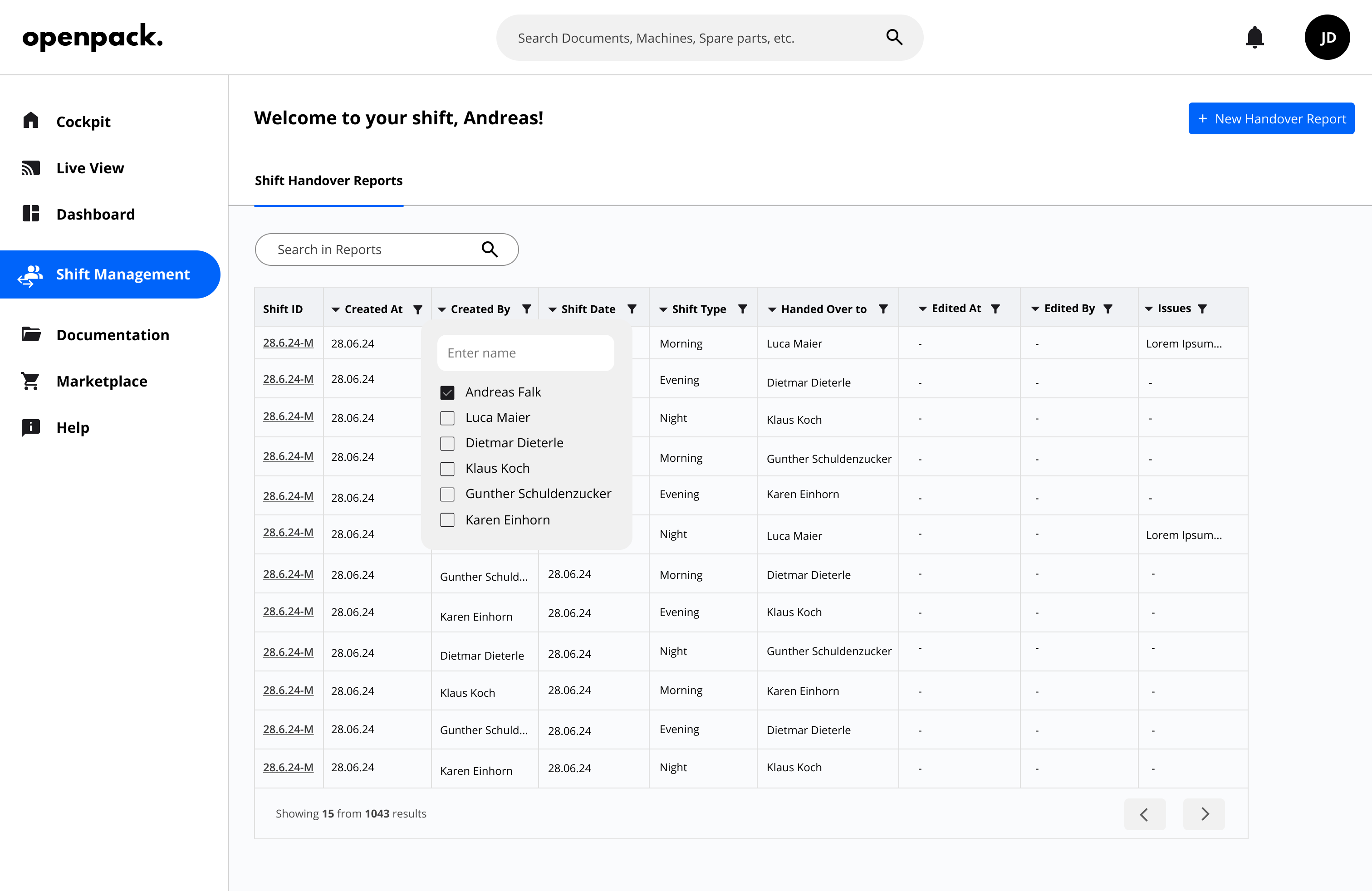
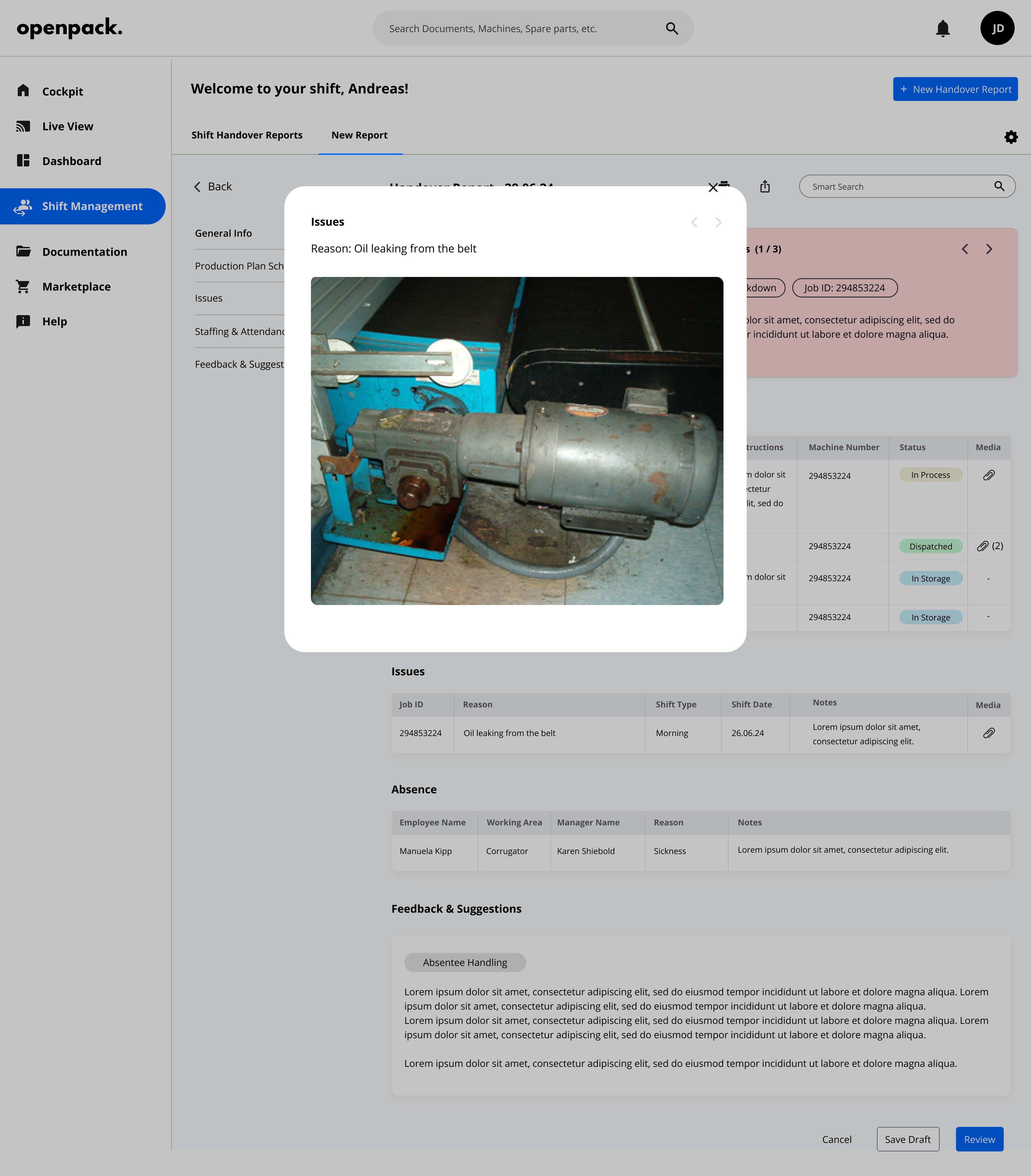
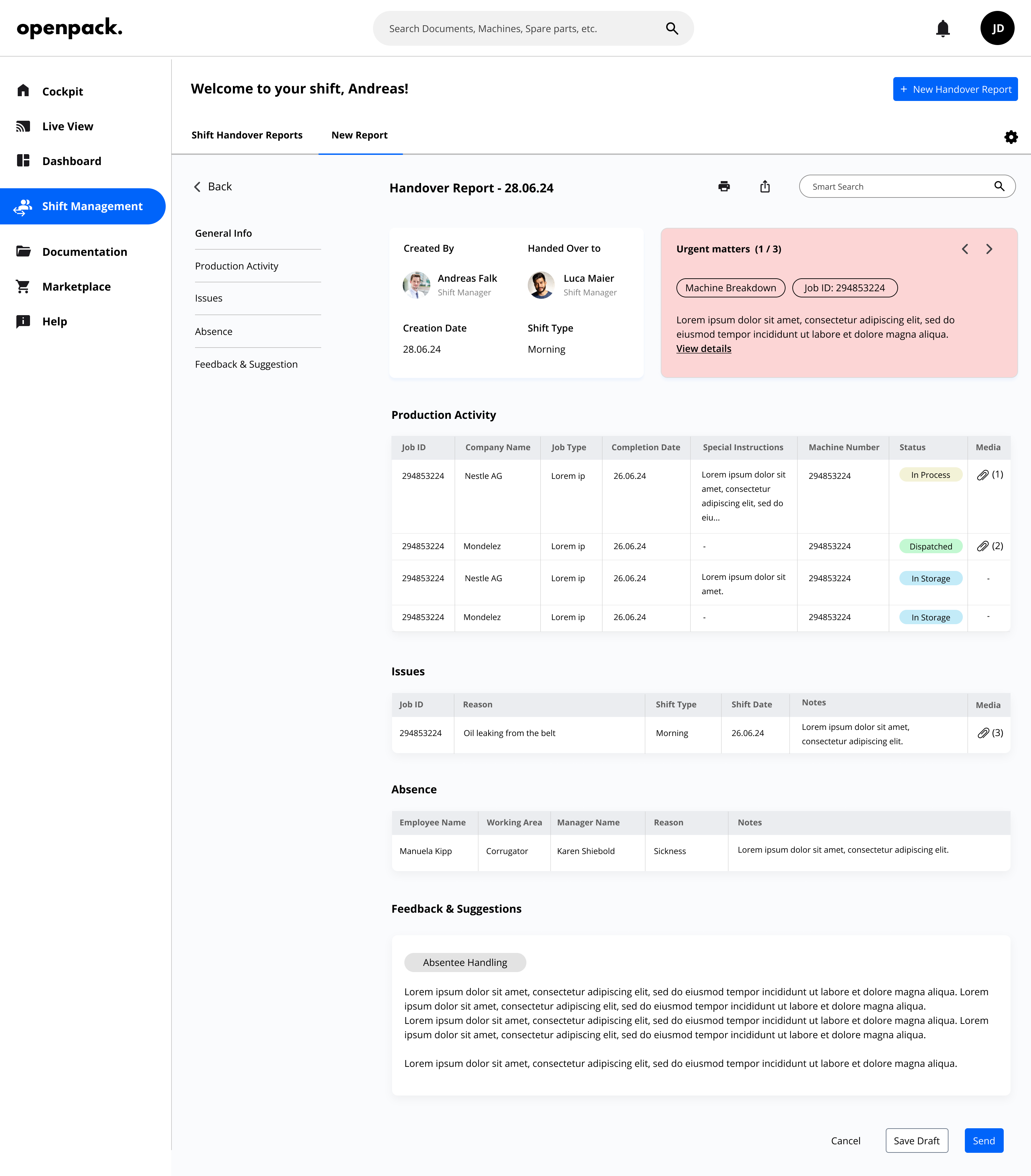
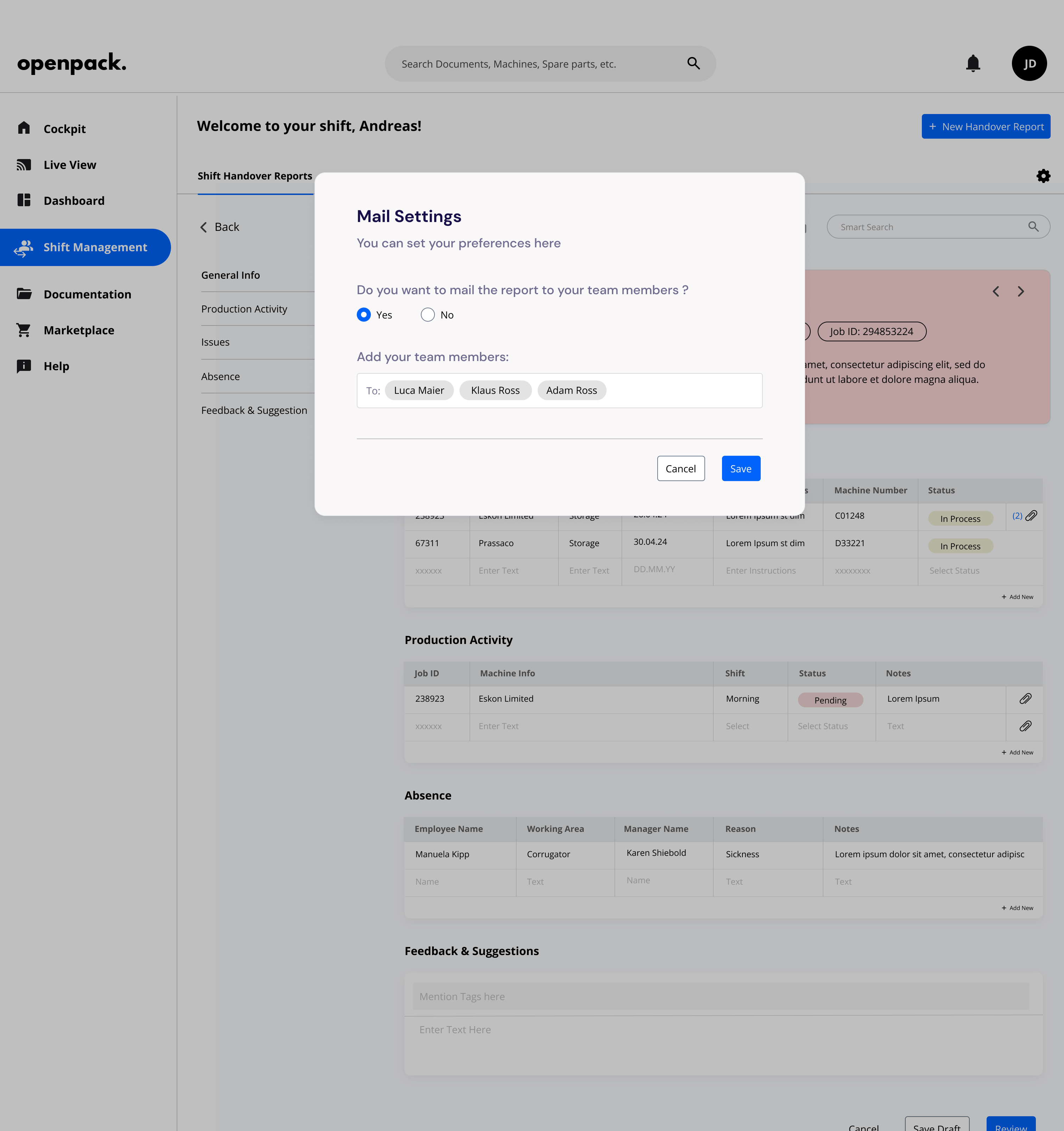
The final high-fidelity prototype turns a 20-minute paper ritual into a structured, shareable digital handover.
What I'd do differently
With more time, I would have run a formal usability test alongside a contextual inquiry, to measure whether the design actually brings the handover duration down toward the 10 to 15 minute target. The qualitative feedback was strong, but a before and after comparison would have made the case much harder to argue with.