Smart Call: a mobile AI feature that turns phone calls into a calm, usable memory for elderly people and early stage Alzheimer's patients.
Helping them remember without making them feel ashamed or controlled.
It doesn't just store calls. It extracts what matters, like tasks, meetings, decisions. Delivered back through a calm, emotion aware voice, whenever necessary.
42 calls in a single day.
Imagine receiving 42 phone calls in a single day from your father. Sometimes he asks what time dinner is. Ten minutes later, he calls to ask where his keys are. An hour later, he calls just to check if you are still coming over.
We documented this specific case in a patient with more advanced memory loss. But the root cause, a paralysing loop of anxiety, begins much earlier.
For the 55 million people living with dementia, the struggle with anxiety begins long before the disease is visible. For their caregivers, the resulting need for constant reassurance becomes a source of profound exhaustion.
This single metric, the "42 calls", became the design anchor for my work on Luma. It exposed not a memory problem, but a reassurance problem.
That insight directly led me to design Smart Call, an AI powered system that allows people in early stage Alzheimer's to "remember" conversations without having to repeatedly ask for them.
In the early and mid stages of Alzheimer's, patients often retain a strong desire to manage their own lives. They don't want to be "managed"; they want to feel capable. Our goal was to create a supportive layer that helps them maintain that autonomy, rather than just a surveillance tool for their caregivers. This distinction shaped every design decision I made. If the product felt like monitoring, users would reject it. If it felt like support, they would trust it.
One feature inside a multimodal ecosystem.
Luma is a multimodal AI ecosystem we designed to support this goal.
As a team of four, we focused on different critical features for the target group, such as emergency response system, location tracking, reminders and more.
I was responsible for the Smart Call feature, from defining the problem to designing how it works and how it speaks to users. My focus was on solving the friction of repetitive communication without eroding their sense of self worth.
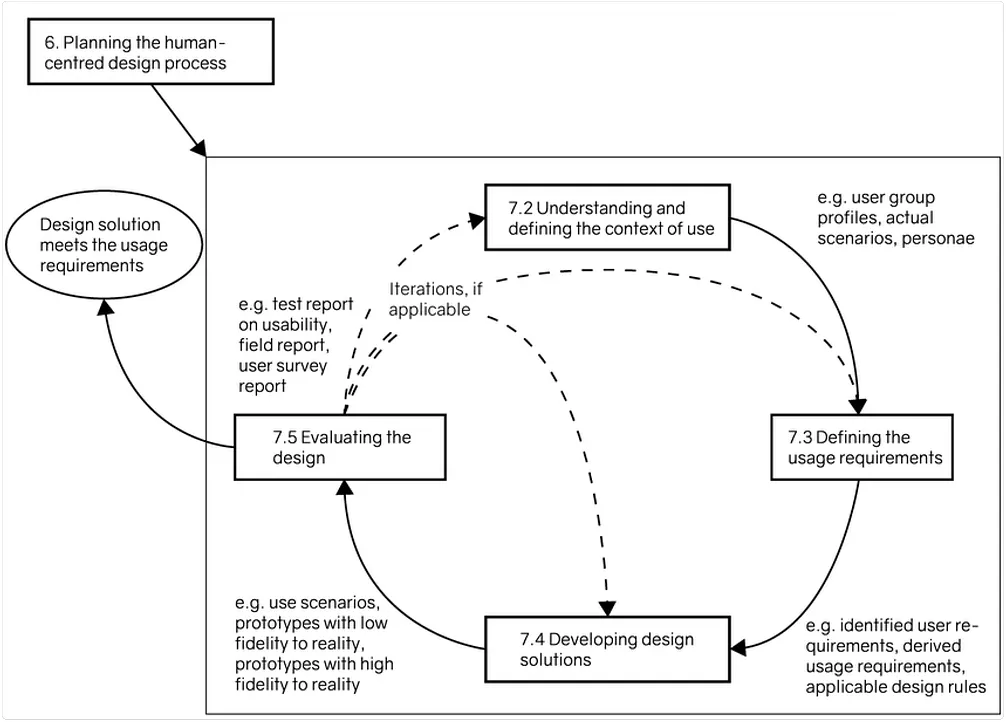
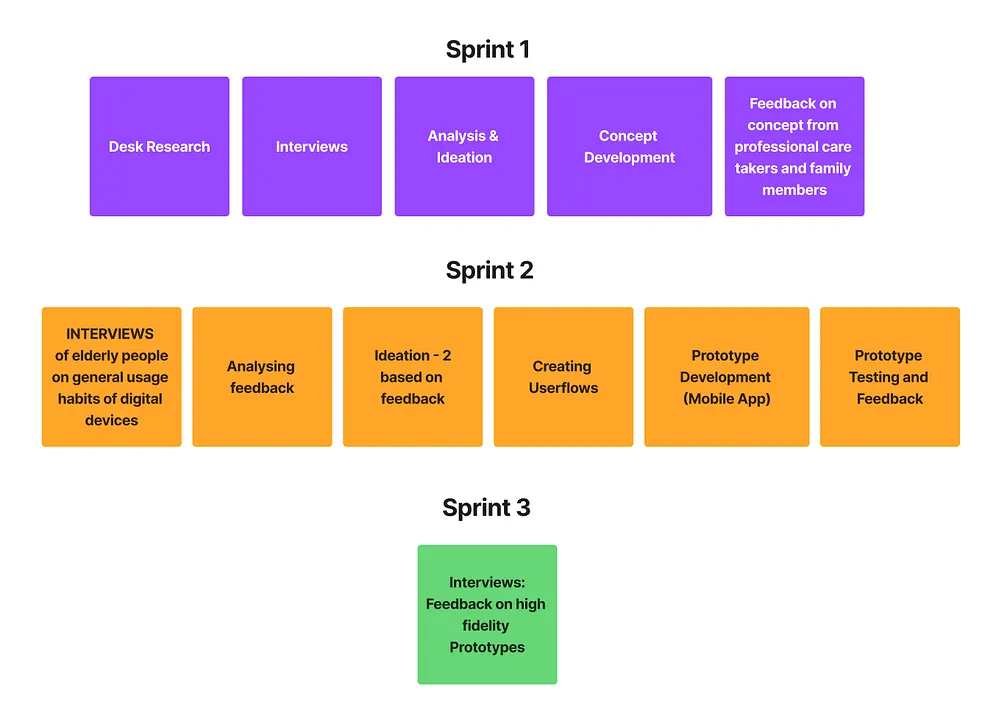
Three sprints, grounded in ISO 9241-210.
We grounded our work in the ISO 9241-210 human centered design framework, moving through three distinct sprints which involved various steps, starting from desk research to testing the final high fidelity prototype.
A gap where emotional intelligence should be.
We started with a wide lens. Before talking to users, we conducted desk research to map the competitive landscape and see what solutions already existed.
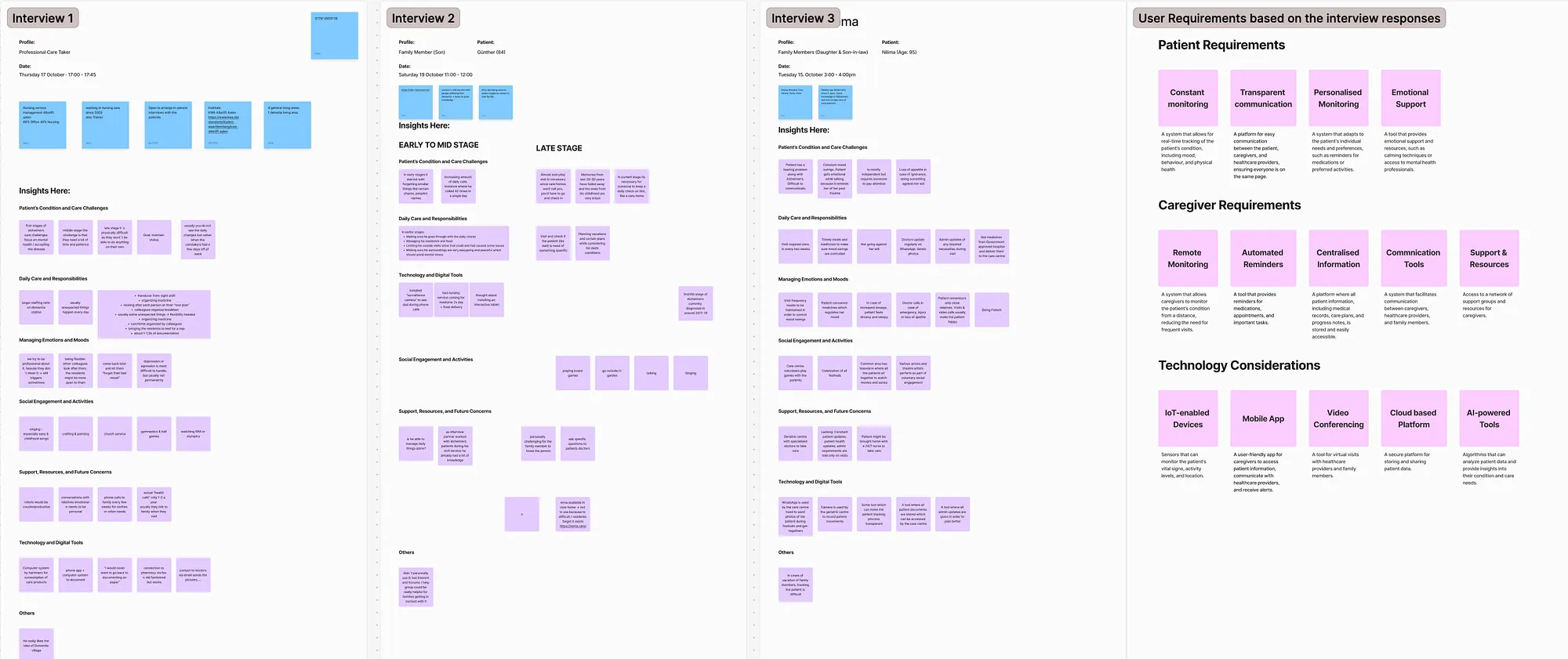
Our early analysis revealed a gap. Most existing tools were either expensive hardware or purely functional trackers. They lacked the emotional intelligence required for a disease where confusion drives anxiety. We validated this through interviews with family members. That's where we found our metric: the "42 calls" case study. We learned that the patient wasn't just repeating one question, he was cycling through a variety of anxieties related to food, documents, appointments, seeking constant reassurance.
If we could provide this reassurance automatically to someone in the early stages, we could prevent this anxiety from spiralling into the exhaustion we saw in later stages.
Designing for Robert.
To address this anxiety effectively, we needed to look closely who we were designing for. We synthesized our research into a primary persona: Robert.
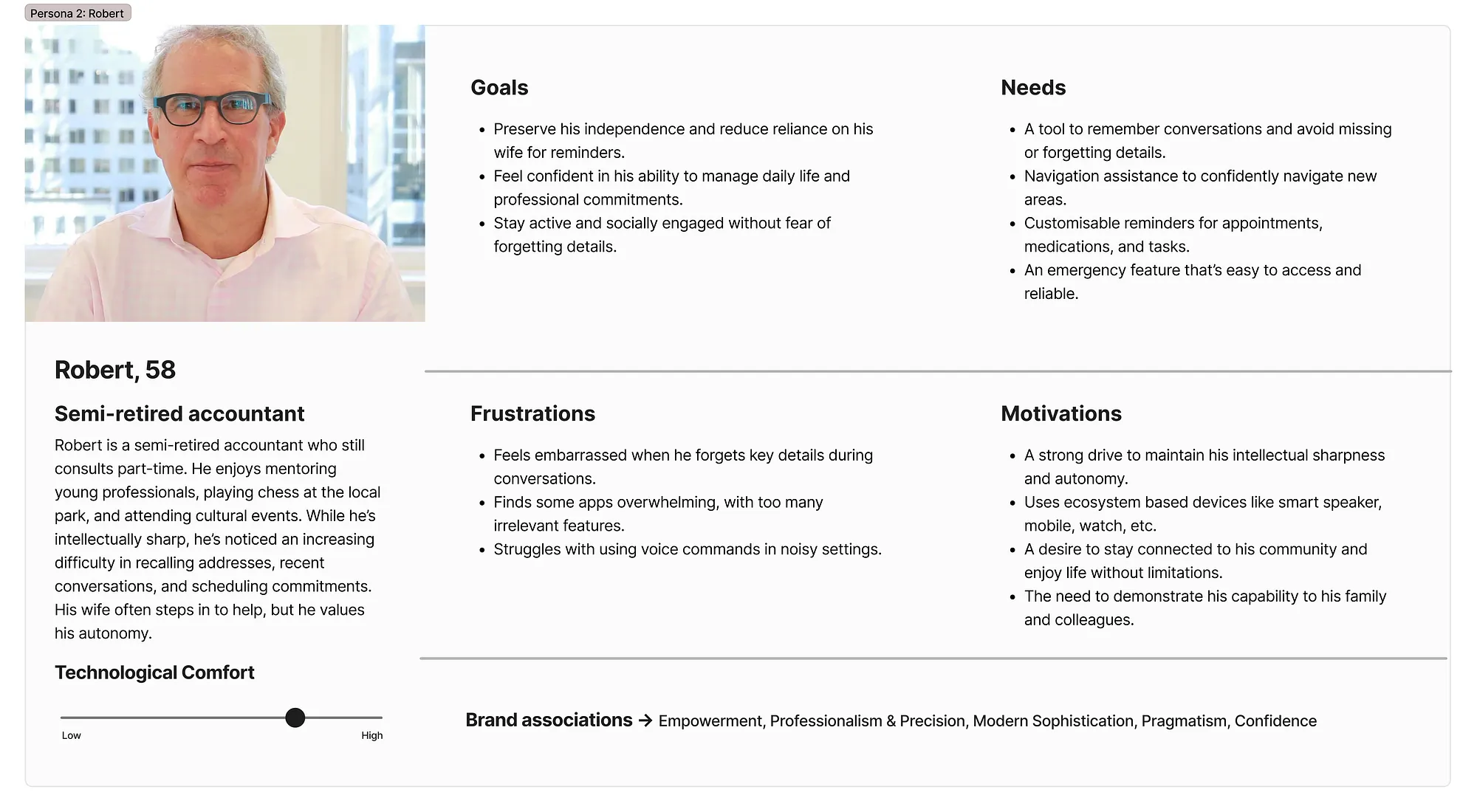
Robert is 58. He plays chess and mentors young professionals. He isn't "lost". He's embarrassed. He hides his memory lapses because he fears the stigma of the diagnosis.
We initially thought a dedicated smart home device was the answer. But talking to our target group and our research into the psychology of the disease revealed that stigma and denial are massive barriers.
We found that many early stage patients are either unaware of their condition or too embarrassed to admit it. Introducing a strange, new medical device into Robert's home would only amplify his anxiety.
Hence, we decided that a mobile app was the most viable entry point. Robert already trusts his phone. It's his lifeline to the world. By integrating our solution into a device he already uses, we could offer help without making him feel like a patient.
A transcript isn't enough.
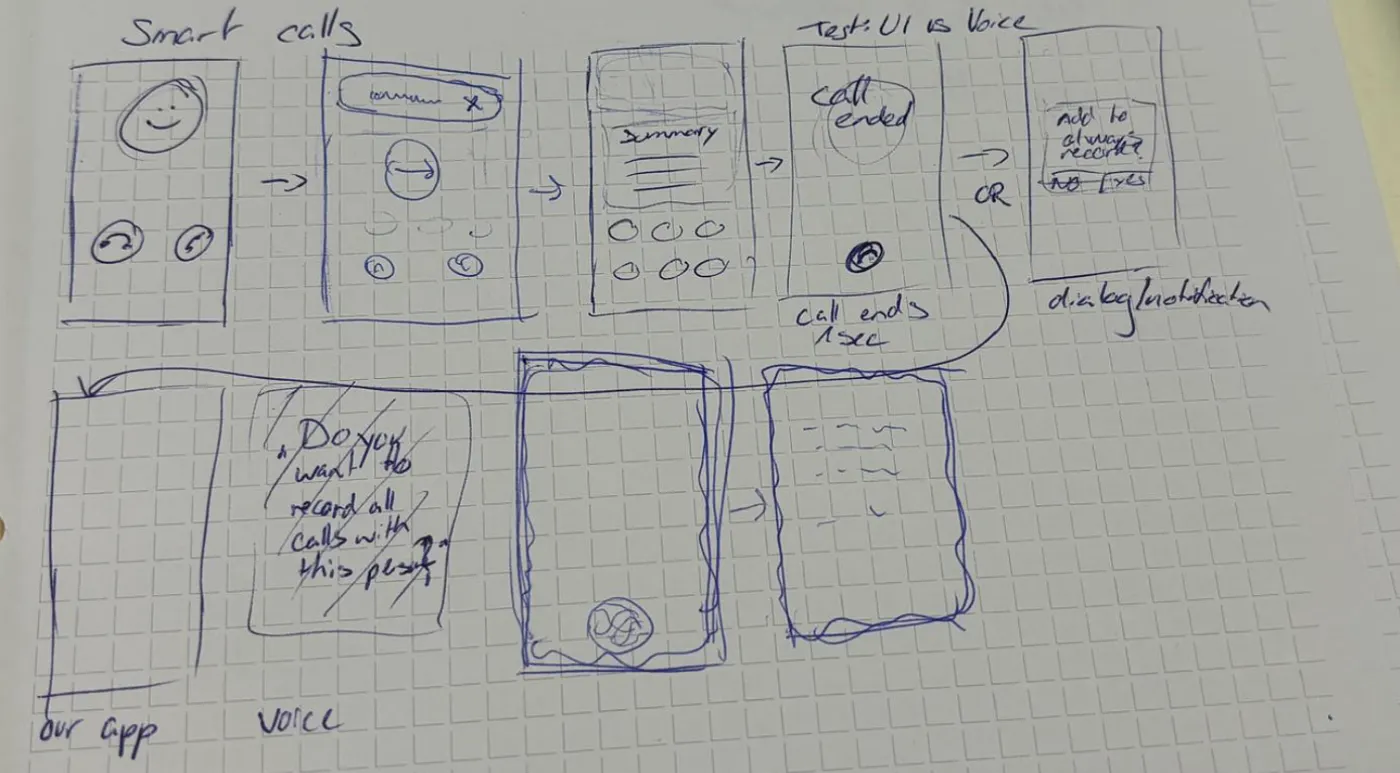
The above findings led to the Smart Call feature. The concept was simple: allow Robert to "remember" a conversation without having to ask for it again.
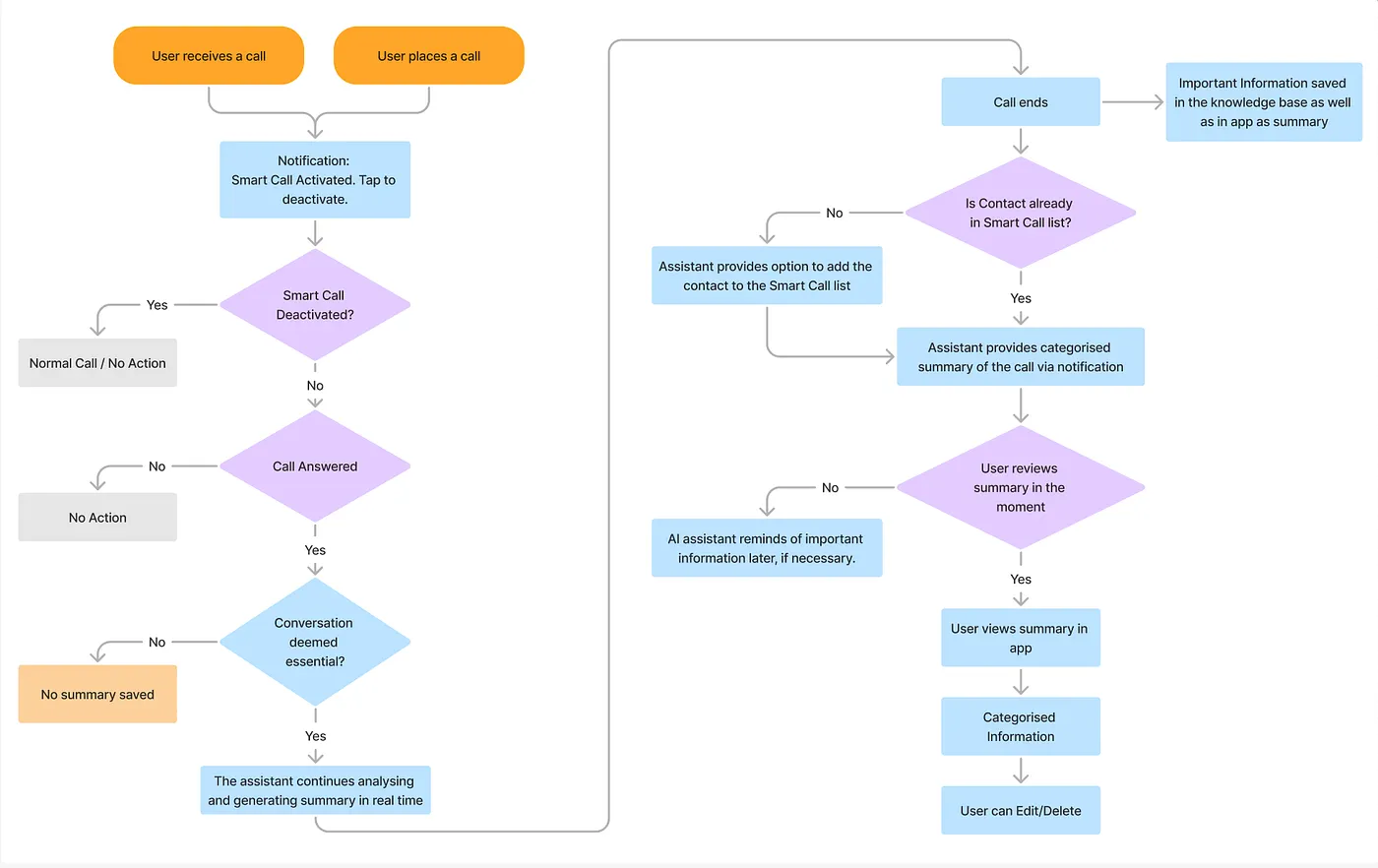
But a simple transcript isn't enough. I designed the system to use Emotion AI to analyse the context of the call.
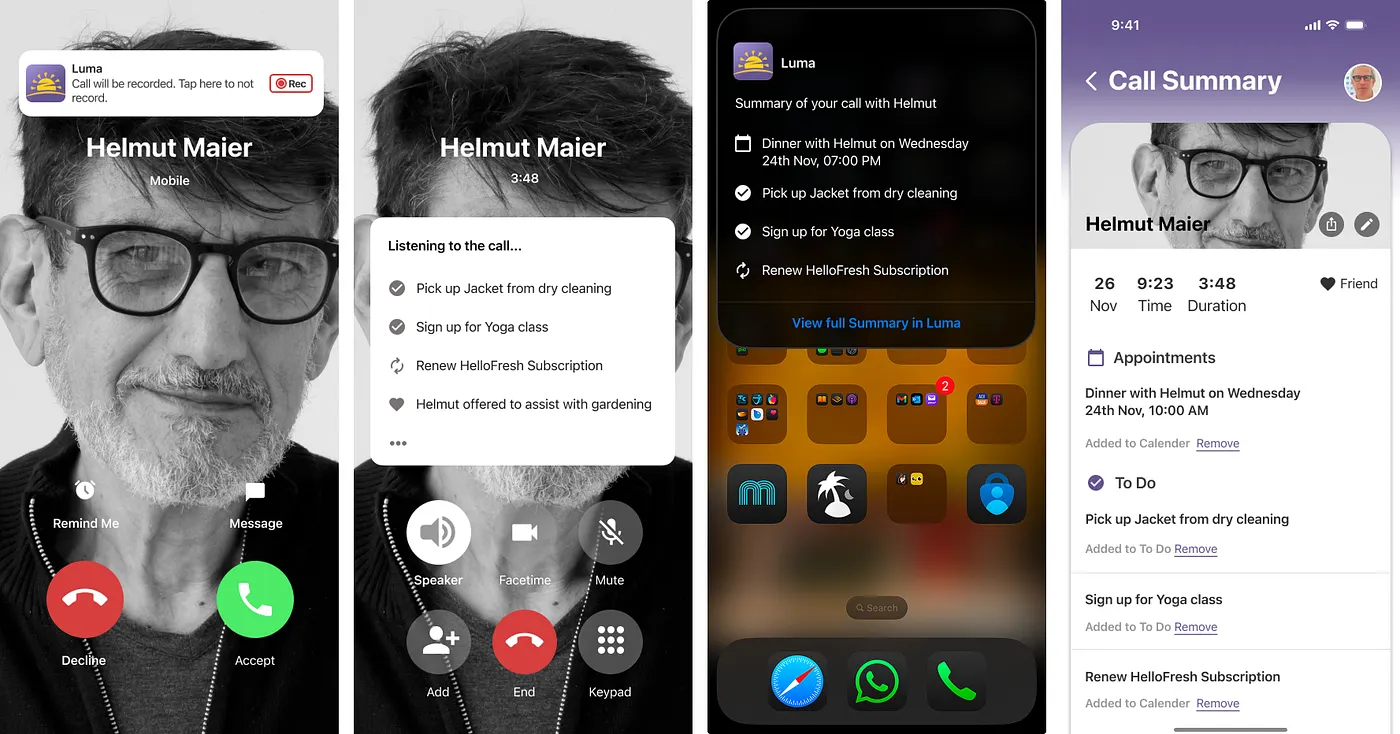
The system automatically identifies and pulls out tasks (Pick up dry cleaning) and appointments (Dinner at 6 PM).
The AI learns from tone. If it detects that Robert had a stressful call, it adapts its voice to be calmer and more supportive when referencing that info later.
Tested with caregivers and clinicians.
As part of Sprint 3, we showed the high fidelity prototype for Smart Calls to primary caregivers and healthcare professionals to see if the logic held up.
The feedback was very positive. Participants confirmed that simply being able to see what was discussed gave them a sense of security. One user noted that the friendly, nonjudgmental nature of the assistant reduced their fear of making mistakes. Most importantly, a dementia specialist told us that reducing this specific type of stress helps "normalise" the disease.
One specialist we spoke to felt that reducing this kind of stress helps make the condition feel more manageable day to day.
A dementia specialist
What I took away from this project.
Designing for healthcare often feels like a race to add more sensors and more tracking. But this project highlighted for us that the best technology is often the kind that sits quietly in the background. By pivoting away from complex hardware and focusing on the emotional friction of communication, we built something that didn't just solve a problem, it protected the dignity of the people using it. And for users like Robert, that dignity is everything.